Zuul crurivastator
Royal Ontario Museum | 2018-2019
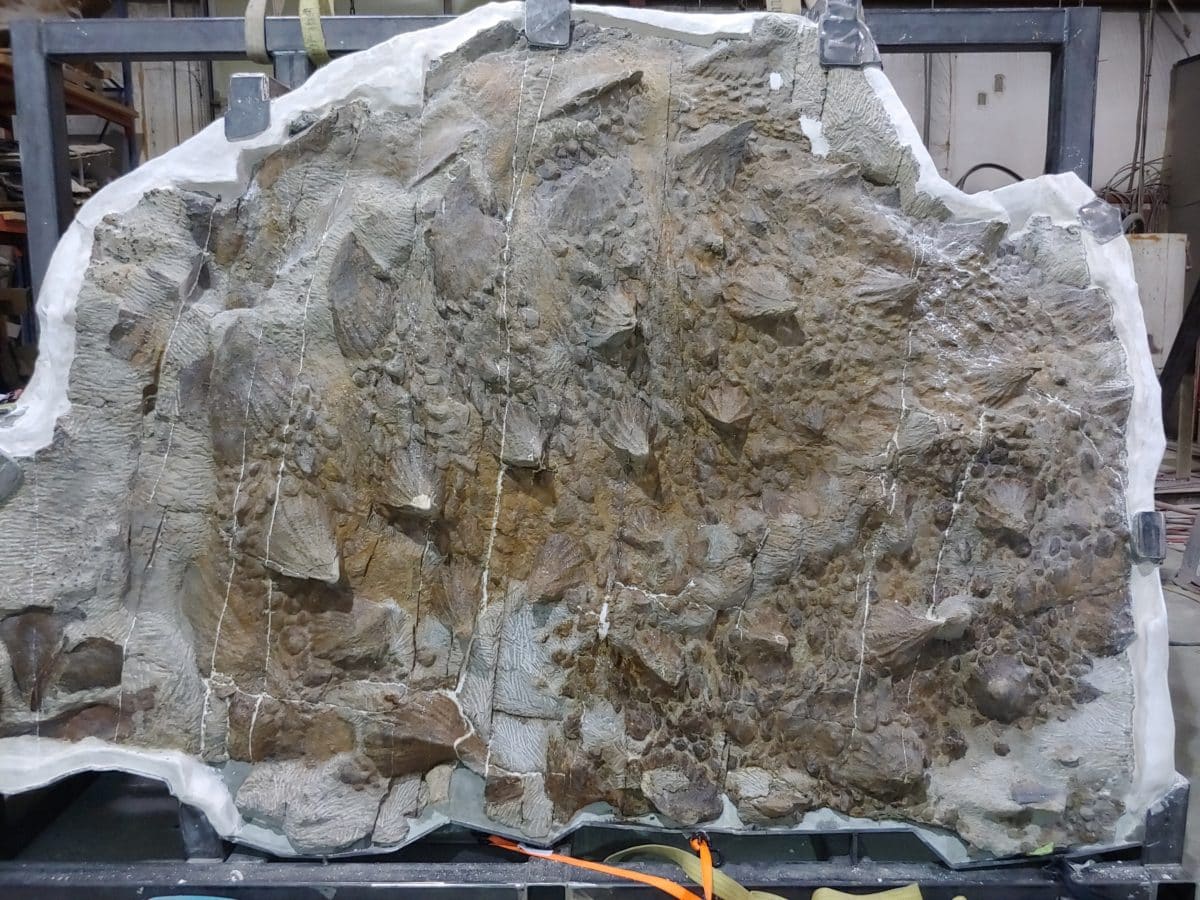
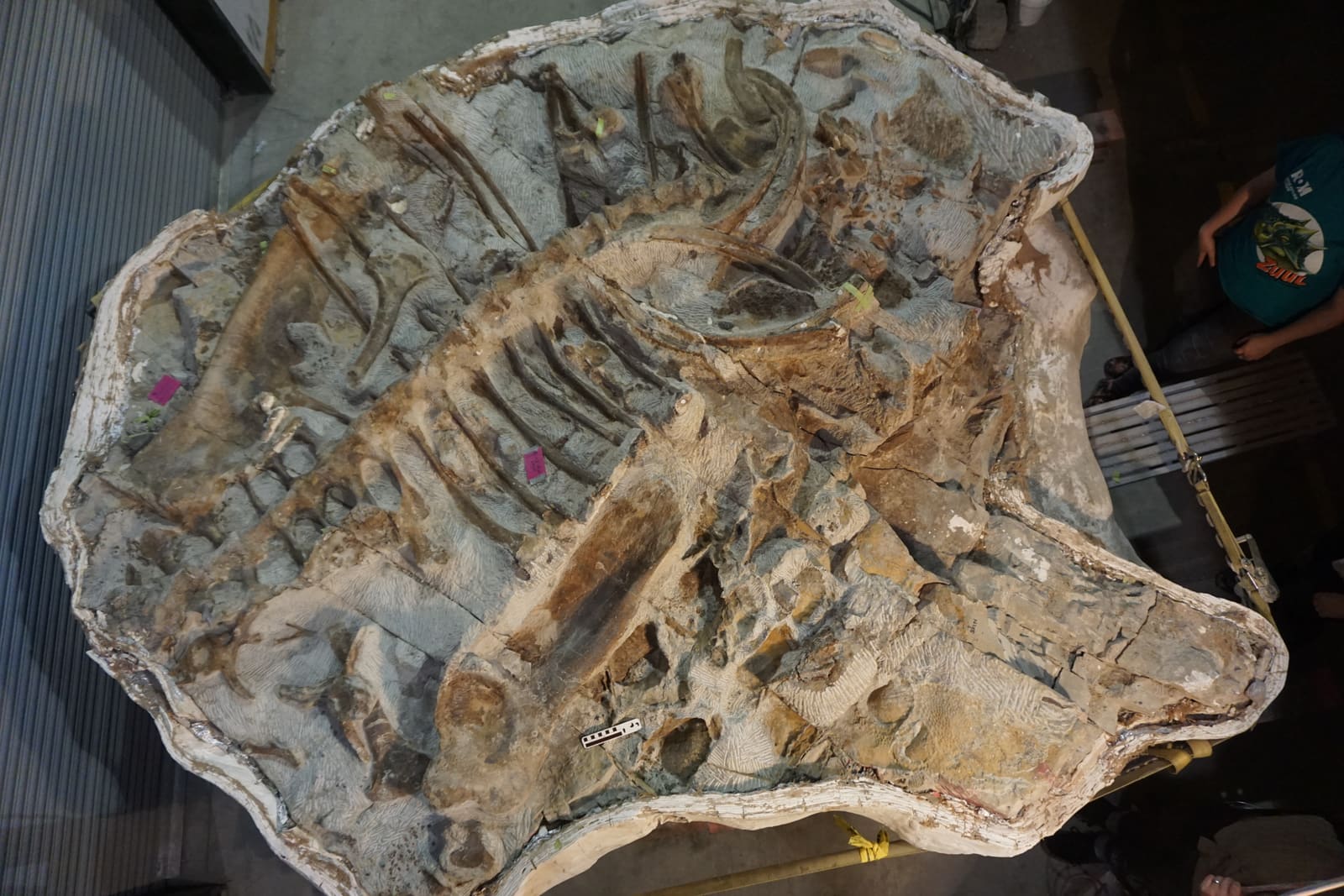
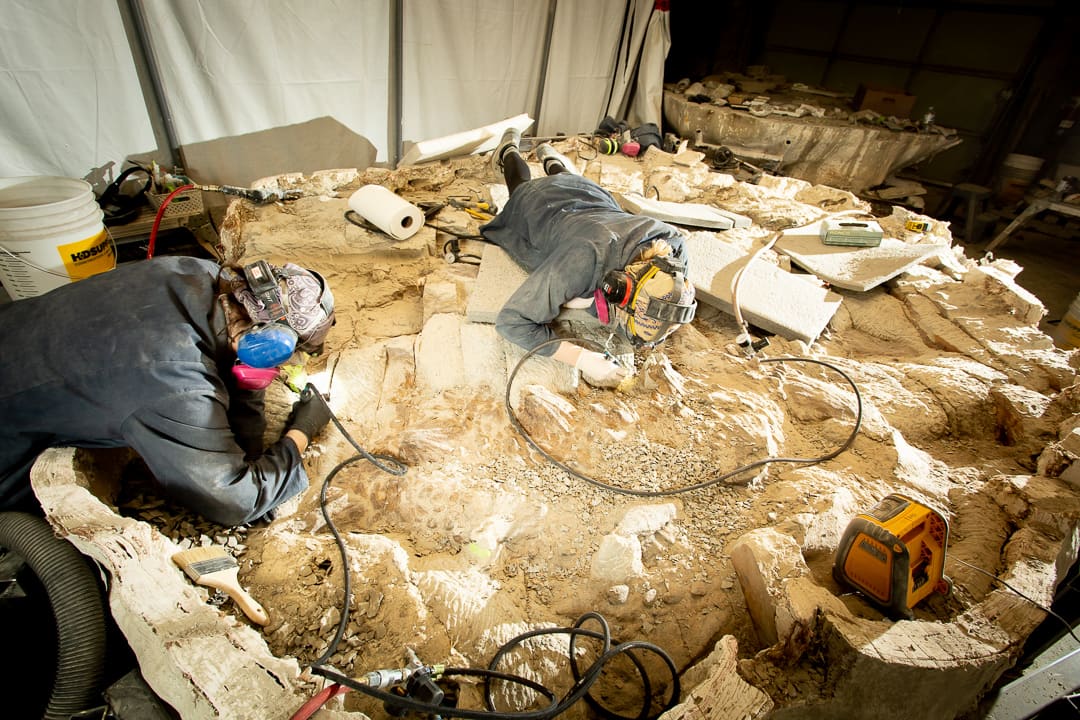
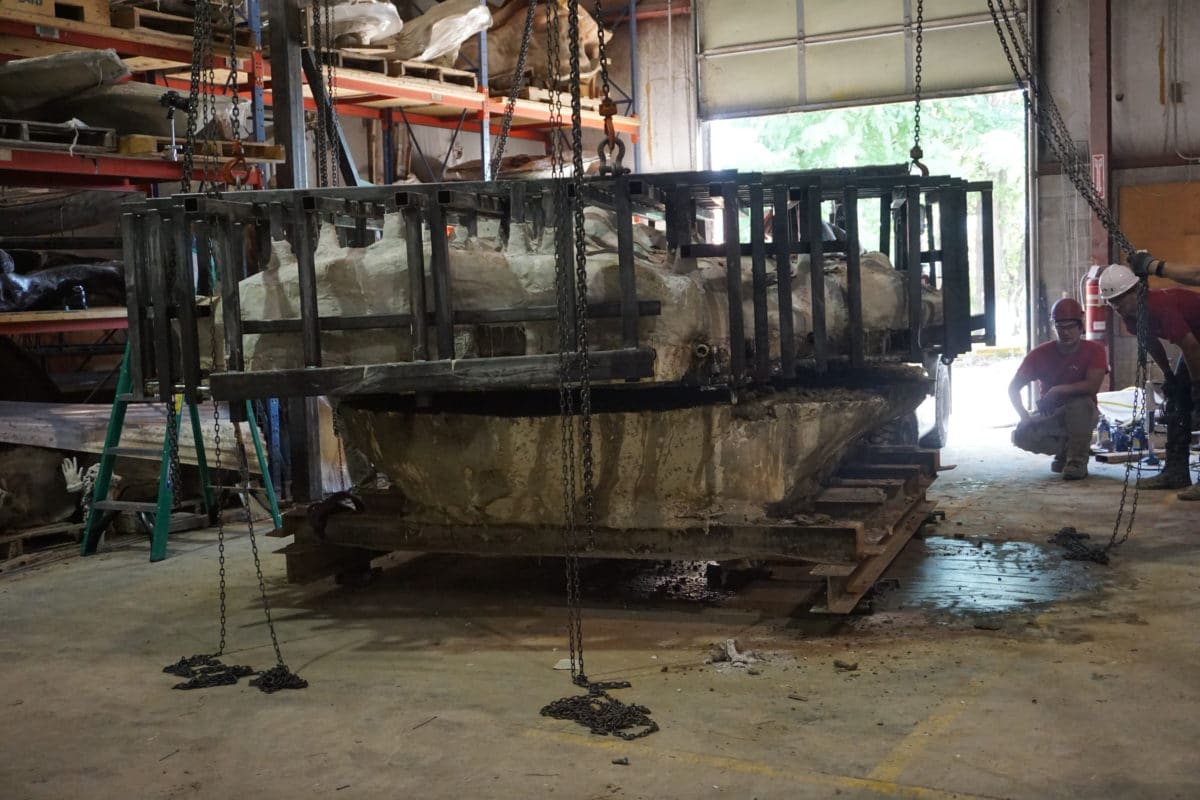
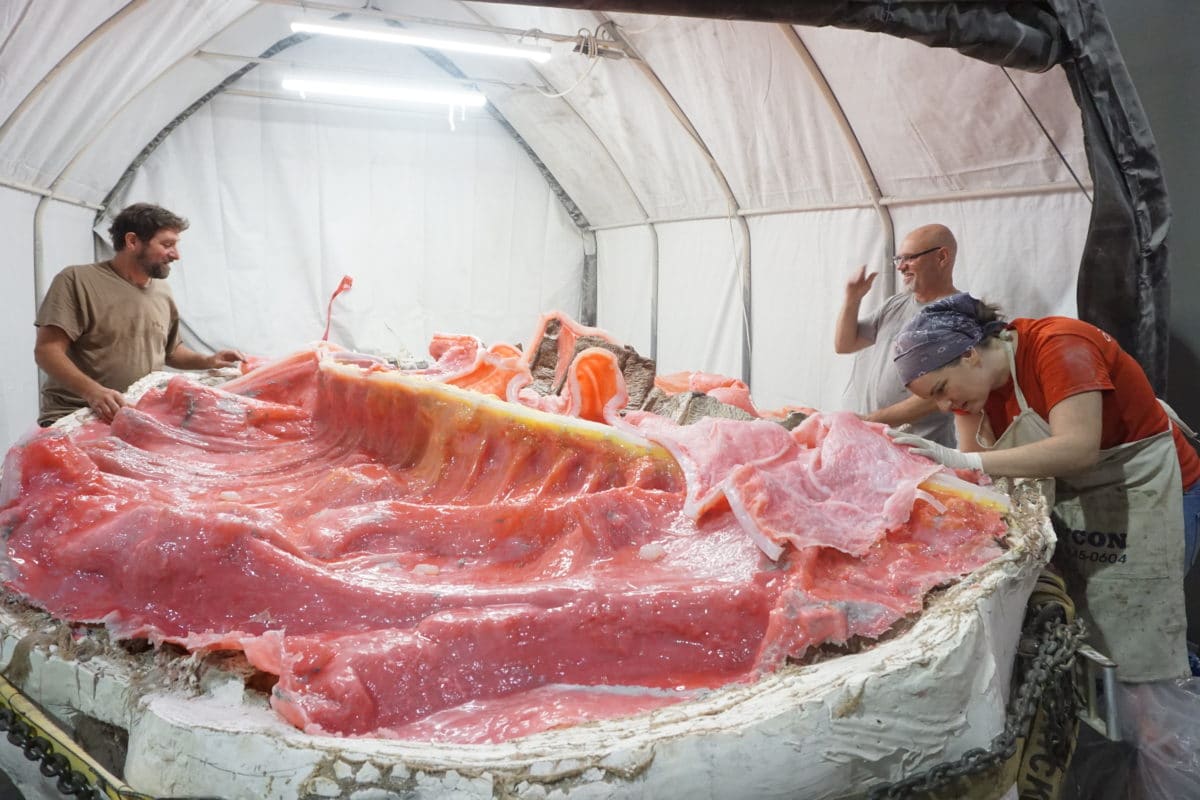
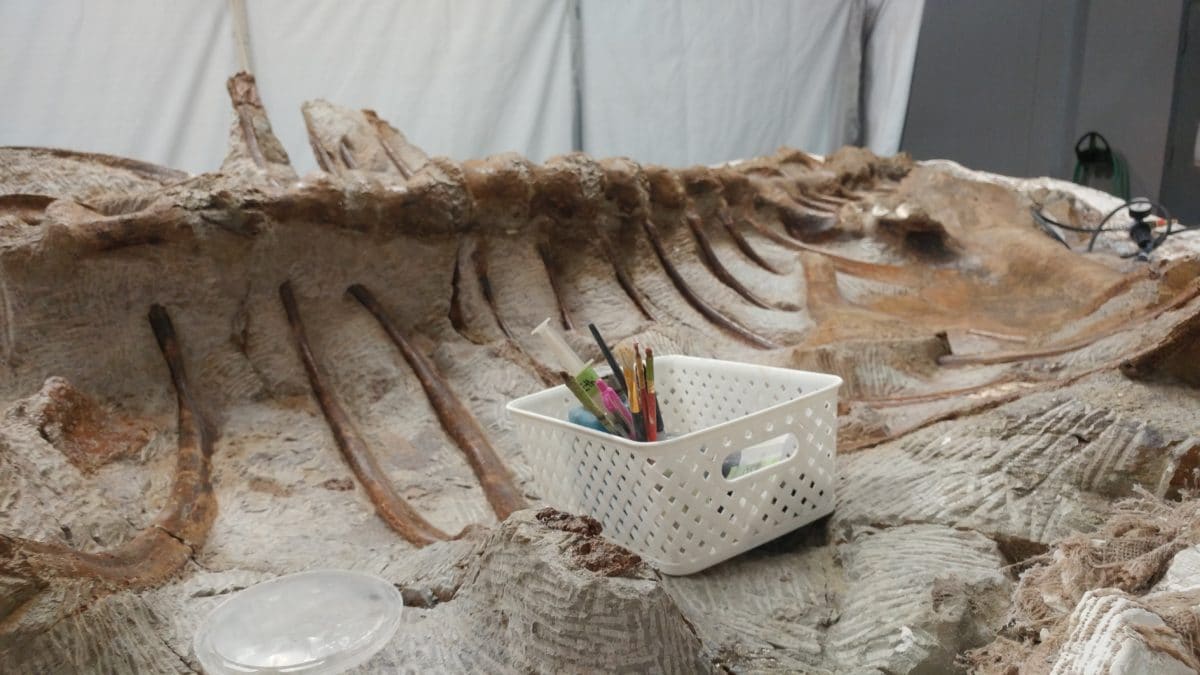
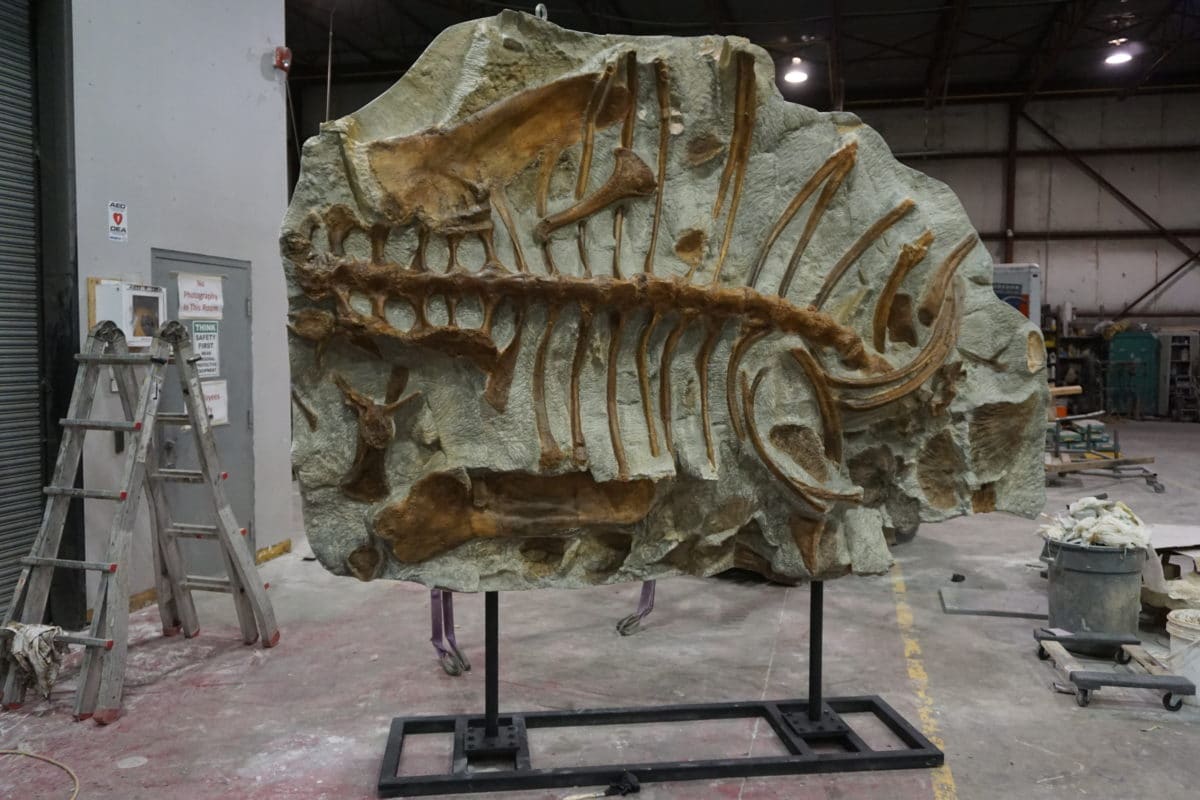
In 2016, the Royal Ontario Museum (ROM) purchased a recently discovered fossil specimen of a new ankylosaurus species from the Campanian Judith River Formation of Montana. Zuul crurivastator had not yet been described and remained in large jacketed blocks. The ROM did not have the capability to fully prepare the main block, weighing 37,000 lbs. due to its size, weight, and amount of fossil preparation required. RCI was contracted to prepare the main block for display. We uncovered the majority of the skeleton’s main body on one side. We then flipped the block over and prepared out the other side, unveiling a nearly complete keratin impression of its armour, spikes, and some skin. Our trained preparation team allowed us to prepare this specimen within a very tight deadline without compromising any of the fossil’s integrity. Additionally, our expertise with heavy machinery and mounting allowed us to handle such a large piece and create a secure and stable mount for display. When we began preparation, It was unclear exactly how much fossil was in the matrix block. Early investigation hinted at a substantial amount of skeletal and skin fossilization. Main preparation began in February 2018 with the goal to have the fossil on display by mid-December 2018. The ROM additionally wanted scans and molds prepared in the hope of developing a traveling show. The skeletal side was prepared out and it was molded. There was still a substantial amount of rock underneath. The weight and size of the block exceeded the maximum capabilities of the building and gallery at the ROM. We calculated an estimated area where excess matrix existed. We fabricated a steel structure and home-built rope saw to cut a substantial amount of matrix away from the bottom. Once completed, the block needed to be jacketed and flipped over. We installed a crane overtop the block and used chain falls to flip the block, which weighed 15,000 lbs. at the time. Preparation then began on the other side. This side revealed an amazing fossilized skin surface. RCI preparators finished the block for display reducing the size and weight to make it possible to bring the specimen in the museum space. We took a mold of this side of the block and we fabricated an armature to move and display the specimen. The zuul exhibit was a huge success. The fossil has since been brought back to RCI for temporary storage.